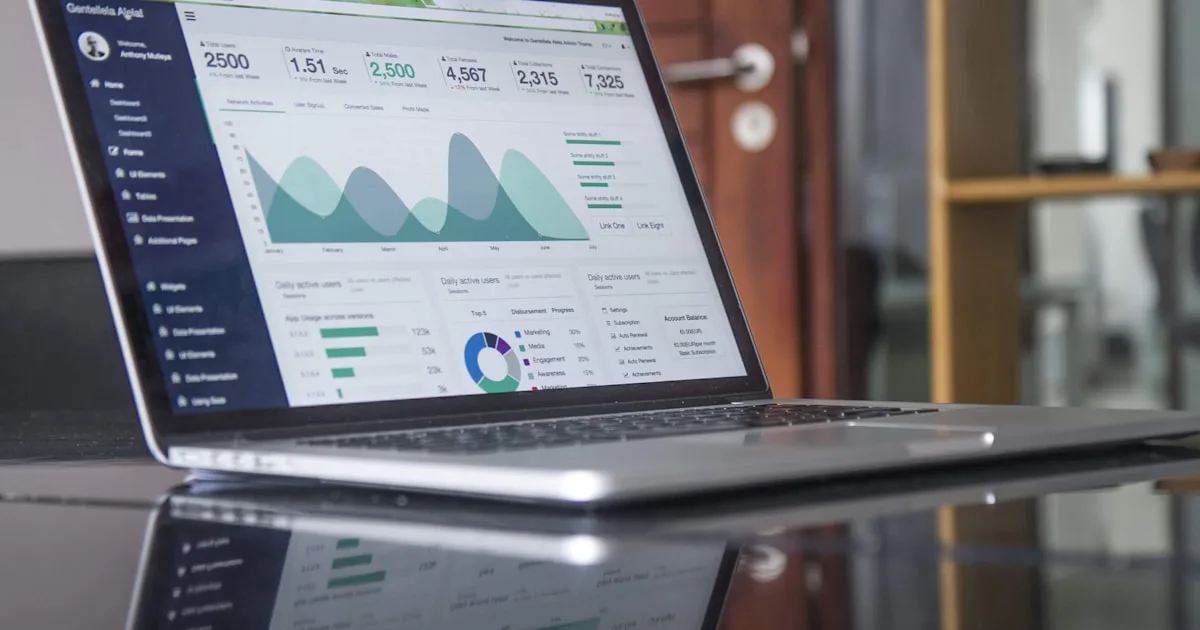
Finding the best website carbon tool is harder than it looks. Every major option occupies a slightly different niche — some measure, some monitor, some badge, some do all three — and the marketing copy is rarely honest about what each tool actually cannot do. I have spent time with all of them. This comparison is what I wish had existed when I was trying to figure out which tool deserved a place in my workflow.
Short answer for readers in a hurry: if you want a free one-off scan, use WebsiteCarbon.com. If you want monitoring alerts, an embeddable badge, and an API, Carbon Badge is the strongest combination right now. If you are a French company with REEN law obligations, Greenoco is worth the price. Everything else is either more limited or aimed at a narrow use case. The rest of this piece explains why.
Why Website Carbon Measurement Is More Complex Than It Looks
Before comparing tools, it is worth understanding why scores differ even when you feed the same URL into different scanners. Website carbon calculators do not directly measure energy consumption — there are no power meters attached to your server. They estimate it, using a conversion model that maps page weight in bytes to kilowatt-hours to grams of CO₂.
The most widely used model is the Sustainable Web Design Model v4 (SWDM v4), published by Wholegrain Digital. The core formula:
CO₂ (g) = page_weight_GB × 0.194 kWh/GB × 494 gCO₂/kWh × (1 − green_factor)Where green_factor = 0.243 if your host is verified renewable by the Green Web Foundation. Tools that use SWDM v4 will produce comparable results. Tools with proprietary methodologies will not — which creates a real problem when you try to benchmark across platforms or explain a score to a client or auditor.
The second variable is what gets measured: the homepage only, or the actual page you specify? One-time snapshots, or recurring scans? Green hosting verification via the Green Web Foundation database, or self-reported? These choices create meaningful differences in what a score actually means.
That context matters for reading the comparison below.
At a Glance: The Full Comparison Table
| Tool | Price | SWDM v4 | Badge | Monitoring | API | Multi-lang |
|---|---|---|---|---|---|---|
| Carbon Badge | $0 (scanner) / $19 / $49 / $99 | Yes | Yes (paid plans) | Monthly / weekly / daily (by plan) | Pro+ | No |
| WebsiteCarbon.com | Free | Yes | Live, 24h cache | No | No | No |
| Ecograder | Free | No (custom) | No | No | No | No |
| Digital Carbon Online | £13.25/mo | Yes | Yes | Scheduled | Limited | Limited |
| Greenoco | Paid (see site) | No (proprietary) | Eco-score widget | Continuous | No | Partial |
| Digital Beacon | Free | No (OneByte) | Yes | No | No | No |
| EcoPing | Signups closed (2026) | — | — | — | — | — |
Carbon Badge — Best All-Round Tool
Full disclosure: this is the tool I work with directly. I will try to be fair about its limitations as well as its strengths, but you should factor in that context.
Carbon Badge is built around a published methodology — the SWDM v4 formula described above — so the grade it gives you is explainable rather than a black box. The free scanner requires no sign-up — enter a URL, get a full breakdown of page weight, CO₂ per pageview, hosting status, and grade within about fifteen seconds. It is the tool I reach for when a client asks "how bad is our site" and I need a number in the next thirty seconds. That free tier is scanner-only, though: one page per scan, up to three scans a day, no badge.
What sets it apart from the one-off scanners is the badge and monitoring combination, available from the Starter plan up. Once you register a site and embed the badge, it shows the grade from the most recent scan stored for that domain — not a snapshot frozen on the day you installed it — and the image itself is served with a 24-hour cache header. Rescans happen from the dashboard, and each paid plan includes monitoring alerts (monthly on Starter, weekly on Pro, daily on Enterprise). If a developer ships a release with an unoptimised video background and your homepage doubles in weight, the next scan — and the badge — will show it.
The tier structure is worth understanding, because the free plan is a scanner, not a monitoring product. Free gives you one page per scan and up to three scans a day, with no badge. Starter, at $19/month, covers one site with the certified SVG badge and monthly monitoring alerts — the entry point if you want a badge that actually reflects reality. Pro, at $49/month, covers up to ten sites with weekly monitoring alerts, API access, and PDF reports. Enterprise, at $99/month, covers unlimited sites with daily alerts and a white-label badge — the tier built for agencies and companies with formal sustainability reporting requirements. The full pricing page breaks down what each tier includes.
Honest limitations: the historical charting in the dashboard is minimal compared to what a mature analytics platform would offer. And the site-wide crawling that EcoPing used to offer — automatically scanning every page on a domain, not just registered sites — is not there. You register specific sites and scan specific pages within your plan's limit, which requires intentional setup rather than automatic discovery. Those are real tradeoffs, not dealbreakers, but worth knowing.
Best for: developers, agencies, and sustainability-conscious companies who want monitoring + badge + methodology they can defend to clients and auditors.
WebsiteCarbon.com — The Pioneer, Still the Best Free Scanner
Wholegrain Digital built Website Carbon Calculator before most people in the industry were thinking about digital sustainability seriously. It was one of the first public tools to make the concept legible to non-technical stakeholders, and it has introduced more people to website carbon measurement than any other tool in existence. For that, it deserves genuine credit.
The scan is fast, the output is clear, and the methodology is based on the Sustainable Web Design Model, the same family of formula Carbon Badge uses. The npm package is a genuinely useful addition for developers who want to integrate one-off carbon checks into build pipelines or test suites. The technical quality of the tool is high.
The limitations are structural, not accidental. It is free only, with no commercial tier, no ongoing monitoring dashboard, and no API for business use. The badge recalculates on each page load rather than displaying a frozen image, though the result is cached in the visitor's browser for up to 24 hours, so it is not instantly live on repeat visits either. What it does not give you is a history: no dashboard tracking the trend over time, no alerting, and no record of past scans to compare against.
For a client who says "I just want to know roughly where we stand" or for a one-off audit before a redesign project, WebsiteCarbon.com is still my first recommendation. For anything that requires ongoing measurement, it is the wrong tool. The methodology page on their site is also one of the clearest public explanations of SWDM v4 available — worth reading regardless of which tool you use, alongside the SWDM v4 deep-dive for the technical details.
Best for: quick one-off checks, client demos, and situations where all you need is a single number to start a conversation.
Ecograder — The Broadest Sustainability Audit
Ecograder is built by Mightybytes, an agency with genuine sustainability credentials. It occupies a different niche from the other tools here: rather than focusing purely on carbon emissions, it produces a composite sustainability score that combines carbon estimation with Lighthouse performance metrics, accessibility signals, and broader web hygiene indicators. You get something closer to a full audit than a carbon measurement.
That breadth is a genuine strength in client situations. Walking into a meeting with a report that says "your site is slow, not fully accessible, poorly structured for SEO, and emits 1.4g CO₂ per pageview" is more actionable — and more persuasive — than any single metric alone. Ecograder makes sustainability part of a wider quality conversation rather than treating it as a separate specialist concern. Developers who might not care about carbon specifically tend to engage when it is framed alongside performance data they already track.
The tradeoff is depth on the carbon side. Ecograder's carbon component runs on CO2.js, which is itself built on the Sustainable Web Design Model, but it folds that into a composite score alongside Lighthouse performance and accessibility signals — so the final number is not directly comparable to a Carbon Badge grade or a WebsiteCarbon score. When a client asks "why does Ecograder give us a 72 and Carbon Badge gives us a Grade C", the answer requires explaining two different scoring systems, which can undermine the credibility of both. There is also no monitoring, no embeddable badge, and no API. It is a periodic audit tool — excellent for that purpose, unsuitable for ongoing measurement.
Best for: periodic deep audits where you want carbon in context alongside performance and accessibility; internal reporting to teams who respond better to composite scores than single metrics.
Digital Carbon Online — The UK Enterprise Option
Digital Carbon Online is a UK-based SaaS that comes closest to a complete monitoring platform: scheduled scans, a dashboard with historical data, a badge system, and client-facing reporting.
Plans start at £13.25/month, billed annually, and the pricing is transparent — no freemium bait-and-switch, no feature-gating designed to frustrate you into upgrading. At that price, it is affordable for individual practitioners and reasonable for small agencies. The multi-site dashboard is more polished than Carbon Badge's current offering for presenting historical trends to non-technical stakeholders, and the client report exports are a practical feature that agency teams will find useful.
The methodology is more transparent than I first assumed: Digital Carbon Online says it is built on published, open methodologies including the Sustainable Web Design model, and it combines two different methodologies to show a range rather than a single figure. That is a reasonable design choice, but it does mean a score from Digital Carbon Online is not a single number you can drop into a report next to a Carbon Badge grade without explaining the range. The tool is also UK-focused in its language and support, which matters less than you might expect for the core functionality, but does matter if you are working with French or German compliance frameworks.
Best for: UK digital agencies who want monitoring and client reporting in a single tool without the complexity of a multi-tier platform.
Greenoco — The French Market Leader
Greenoco is the most polished tool specifically built for the French market, and it is genuinely good at what it targets. Continuous monitoring, a proper eco-score widget, French compliance framework alignment (REEN law, CSRD reporting), and a dashboard in French that French clients can actually navigate without translation support. Pricing is not a flat published figure — check greenoco.io directly — but it reflects a genuinely different audience and scope than the general-purpose tools on this list.
The eco-score approach is worth understanding. Rather than a pure carbon calculation, Greenoco produces a composite environmental score that factors in multiple sustainability signals — similar in concept to Ecograder but more compliance-oriented. That makes it well suited to French companies that need something they can reference in ESG reporting or tenders with public sector clients, where "our score on a recognised French sustainability platform" carries more weight than a raw gram-per-pageview figure from an international tool.
Outside France, the case weakens considerably. The proprietary eco-score methodology creates comparison problems. The French-first UI and support are real barriers for international teams. The subscription cost is hard to justify when WebsiteCarbon.com is free and Carbon Badge's Starter plan is $19/month, covering the same core measurement need for most non-French contexts. The eco-score is also not directly comparable to SWDM v4-based scores, which means if you need to benchmark against international standards — CSRD Scope 3 reporting, GHG Protocol, or anything that references the Green Web Foundation's methodology — you will need to do additional translation work.
Best for: French companies with compliance-driven reporting requirements, particularly public sector suppliers and companies subject to REEN law or CSRD Scope 3 scrutiny.
Digital Beacon — A Free Single-Page Calculator, Not a Monitor
Beacon — full name Digital Beacon (digitalbeacon.co) — is a free tool built by Aline — not Mightybytes, and not a browser extension or Figma plugin. It is easy to confuse with Ecograder because both target sustainability-minded developers, but they are separate products. You paste in a single URL and get a report: a page weight breakdown, a letter grade styled on the Sustainable Web Design group's grading system, and suggestions for what to fix. A bookmarklet generates the same report for whatever page you are currently viewing, and you can export the result as a PDF.
The methodology is its own thing, not SWDM v4: Digital Beacon calculates emissions using the OneByte model, a partial port of CO2.js, so its numbers sit in a different system to Carbon Badge or WebsiteCarbon and should not be compared gram-for-gram. It does offer an embeddable badge snippet for your own site, unusual for a free single-page tool, though there is no scheduled monitoring and no API. Its Chrome extension was removed in February 2024 over a store policy violation, so the bookmarklet and the web form are the only ways in now.
Best for: a quick second opinion on a single page, using a different methodology to Carbon Badge or WebsiteCarbon, when you want a PDF to attach to an email.
EcoPing — Winding Down Since Early 2026
EcoPing is included here because it still generates significant search traffic and people encounter references to it in sustainability tooling discussions. The short version: EcoPing stopped accepting new signups in early 2026 to refocus on its sister product, CarbonRunner. The company's own announcement, archived here, said the platform would keep running for existing users for a while before being switched off. The ecoping.earth domain now redirects to a CarbonRunner page explaining the change, and any embedded EcoPing badge is likely broken, since the badge endpoint sits on the same infrastructure that has been erroring out since the start of 2026.
EcoPing built something genuinely useful while it operated: daily automated monitoring, per-page carbon breakdowns across a domain, an embeddable badge, and periodic email notifications. The stated reason for the pivot was not a lack of revenue — the founders said EcoPing covered its costs — but friction from increasingly aggressive bot-detection systems, with Cloudflare and similar tools blocking the crawl-based measurement approach EcoPing depended on.
If you are migrating away from EcoPing, the practical checklist: run a fresh baseline scan on your key URLs using the Carbon Badge scanner, register those sites for monitoring on whichever plan matches your needs, and replace any embedded EcoPing badge with a working alternative. The full migration guide is in the EcoPing alternatives breakdown. There is no confirmed way to export or carry over EcoPing's historical scan data, so treat this as a fresh baseline rather than a continuation.
Best for: nothing new — if you are searching for EcoPing, you need one of the alternatives above.
How to Choose: Four Scenarios
The right tool depends on what you actually need. These four scenarios cover most real-world cases:
"I just need a quick check on a client's site before a pitch"
Use WebsiteCarbon.com. No sign-up, instant results, based on the Sustainable Web Design Model, shareable link. Done in thirty seconds.
"I want to display a carbon badge on my site and keep it accurate over time"
Use Carbon Badge Starter at $19/month: register your site, get the certified SVG badge and monthly monitoring alerts. The free tier is scanner-only and does not include a badge. If you manage more than one site, or want weekly alerts, API access, and PDF reports, move to Pro at $49/month. The complete badge guide walks through setup.
"I manage 20 client sites and need reporting I can send to clients each quarter"
Carbon Badge Enterprise ($99/month) covers unlimited sites with daily alerts and a white-label badge — the right scale for 20 client sites. Digital Carbon Online (£13.25/month) is the other option. The choice depends on whether SWDM v4 methodology transparency matters for your clients — if they need to cite a published standard, Carbon Badge. If they want a more polished multi-site historical dashboard, Digital Carbon Online is currently more developed on that front.
"I am a French company that needs digital sustainability data for CSRD or REEN compliance"
Greenoco, supplemented with Carbon Badge for SWDM v4 benchmarks if your auditor requires a cross-reference to an international methodology. Check greenoco.io directly for current pricing.
On Methodology: Why SWDM v4 Matters More Than You Think
Every tool on this list produces a number. The meaningful question is: what does that number refer to, and can you defend it to a third party?
SWDM v4 has several properties that make it the defensible choice. It is publicly documented — anyone can read the formula, check the assumptions, and reproduce a calculation. The energy intensity figures are sourced from the IEA and Ember Climate, which are cited primary sources. The green hosting factor uses the Green Web Foundation database, which applies independent verification criteria. When an auditor asks "where does this number come from", you can answer precisely.
Proprietary methodologies — even sophisticated ones — cannot offer that chain. "Our algorithm takes 27 factors into account" is not a methodology. It is a black box, and black boxes do not survive procurement scrutiny or sustainability audits. As CSRD and similar reporting frameworks become mandatory for more companies, this distinction will matter more, not less.
If you want to understand how SWDM v4 actually works before choosing a tool — the formula, the data sources, the assumptions, and the known limitations — the SWDM v4 explainer covers all of it.
For a step-by-step walkthrough of how to measure any website’s carbon footprint — which tools to use, how to apply the SWDM v4 formula with DevTools, and how to interpret scores across different scanners — the website carbon measurement guide is the practical companion to this comparison.
What None of These Tools Does Well (Yet)
Being honest about the current state of the market means acknowledging what is still missing.
No tool currently offers automatic site-wide URL discovery at scale — the ability to register a domain and have the tool find and monitor every significant page automatically, the way a traditional SEO crawler does. You can approximate this by registering individual URLs in Carbon Badge or Digital Carbon Online, but it requires manual setup per page.
Alerting that reacts to a specific regression — "notify me if CO₂ per pageview exceeds 0.5g after any new scan" — is not something I have seen any of these tools advertise, EcoPing included; its email notifications read more like periodic digest reports than threshold-triggered alerts. Carbon Badge's paid plans include monitoring alerts on a monthly, weekly or daily cadence, but I have not seen any of the tools here advertise alerts triggered by a specific regression threshold.
Mobile-specific scanning is also absent from most tools. A homepage that weighs 300 KB on a desktop load may weigh 280 KB or 600 KB on mobile, depending on how responsive images and conditional script loading are implemented. Most scanners use a desktop or neutral user-agent, which means mobile-heavy audiences get an imprecise picture.
These are gaps the market will close. They are worth knowing about now so you can make an informed choice rather than discovering them after committing to a workflow.
Overall Verdict
The website carbon tooling market in 2026 is more mature than it was two years ago, but still fractured. No single tool does everything well, and the right choice genuinely depends on use case rather than price or brand recognition.
For most practitioners — developers, agencies, sustainability-focused companies — the practical stack is: WebsiteCarbon.com for quick checks, Carbon Badge once you need an actual badge and monitoring. The WebsiteCarbon scan costs nothing; moving to a badge that reflects reality means a Carbon Badge Starter plan at $19/month. Both sit in the SWDM v4 family of methodology, and the results are ones you can explain and defend.
The paid tier question comes down to scale. One site that needs a badge: Carbon Badge Starter at $19/month. Up to ten sites with API access and PDF reports: Pro at $49/month. Agencies running more sites, or wanting a white-label badge: Enterprise at $99/month, or Digital Carbon Online, depending on which reporting format your clients prefer. French compliance obligations: Greenoco, with Carbon Badge as a cross-reference layer.
The one thing I would not recommend is measuring, deciding you are done, and stopping there. A Grade A badge earned in January and never rescanned again is not a sustainability programme — it is a trophy. The value is in the monitoring cycle: scan, find regressions, fix them, measure again. The reduction guide covers the optimisations that move the needle most once you have your baseline. Start with images. The gains are immediate and require no philosophical commitment to any particular tool or methodology.
Run the scan. See where you stand. Go from there.